

SALT Effect · Case Study 04
From Resistance to Results: How Frontline Initiative Unlocked Premium Fuel Sales
Two Chennai pilot outlets revealed two different barriers: a team that doubted the techniques, and a forecourt that made the product difficult to reach. SALT addressed both.
15.7×
pilot 1 premium petrol volume
Approximately 120 L normal → 1,887 L reported
65 L
one employee’s full-tank sale
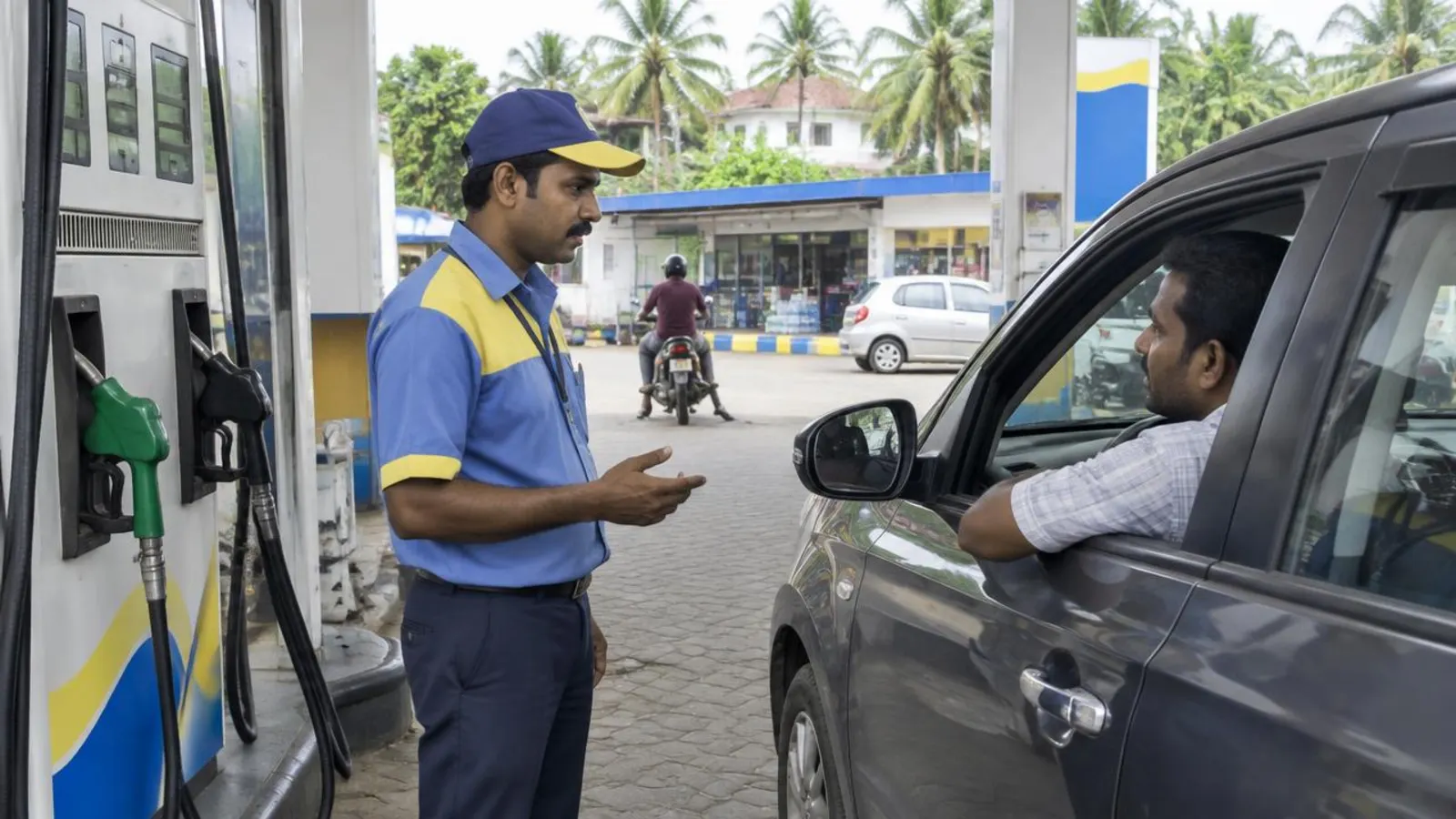
Pilot 1: the interaction that challenged resistance
2.4 KL
pilot 2 premium petrol on day one
A separate outlet; no baseline supplied
01 · The challenge
Two pilot sites. Two barriers to performance.
SALT was given two pilot retail outlets in Chennai to demonstrate improvements in frontline performance and premium fuel sales. At the first site, the barrier was not just capability: an employee who believed the intervention would make little difference actively discouraged colleagues during the first training batch.
Experienced employees can be convinced that nothing will change before a technique has even been tested. The task was to move the team from scepticism to action. At the second site, the challenge also involved the layout of the forecourt—showing why training and operating conditions must be considered together.
02 · The turning point
One real interaction did what repeated persuasion could not.
A young, recently joined employee absorbed the training concepts and looked for a chance to apply them. When a customer arrived in a Kia Carnival, she used the engagement techniques with confidence, perseverance and presence of mind. The customer was himself a dealer and, according to the account, was not easily persuaded.
She explained the proposition and secured a 65-litre full-tank premium petrol purchase. The sale became a practical demonstration for her colleagues: the techniques could work in a real interaction. An individual initiative helped challenge the resistance holding the team back.
Demonstration can be more powerful than persuasion.
03 · The intervention
Pilot 1: coach, apply and let the result speak
The first pilot connected practical techniques to immediate use on the forecourt.
- 01
Teach a usable technique
Give employees a practical approach to engaging customers rather than relying on repeated instructions to sell more.
- 02
Create a real demonstration
A new employee applied the approach and secured the reported 65-litre full-tank premium purchase.
- 03
Challenge the shared belief
A visible customer outcome gave the rest of the team a concrete reason to reconsider its scepticism.
On the ground
Pilot 2: remove the friction before asking for more sales
At the second outlet, the premium nozzle sat at the extreme end of the forecourt. Staff vehicles parked haphazardly obstructed access. Even a confident conversation could fail if the customer could not conveniently reach the product.
Clear the obstruction
Remove the staff vehicles blocking access to the premium dispensing point.
Improve vehicle movement
Reorganise the forecourt so cars can reach the nozzle more conveniently.
Put coaching into practice
Encourage employees to use the training; three of the nine present responded particularly well and became enthusiastic advocates.
04 · The evidence
Two pilots. Distinct reported outcomes.
Pilot 1
15.7× reported volume- Reported normal level
- 120 L
- Following intervention
- 1,887 L
Approximately 120 L normal versus 1,887 L reported. The source does not give an exact measurement period for this pilot.
2,400 L
Premium petrol sold on day one · reported
3 of 9 employees present responded particularly well to the intervention.
A separate pilot with no supplied baseline. This is not a comparison with pilot 1 or a sales conversion rate.
At pilot 1, premium petrol sales reached 1,887 litres against a reported normal level of approximately 120 litres. That is nearly 15.7 times the usual volume. The account links the outcome to practical training and immediate frontline application, but does not specify an exact measurement period for that comparison.
At pilot 2, the outlet recorded 2,400 litres of premium petrol on the first day of the intervention. Clearing access and reorganising the forecourt accompanied the coaching. The result illustrates how employee capability and physical convenience can work together.
Source: supplied SALT website case-study account. Outcomes are reported, not independently audited here or guaranteed for another business.
The key takeaway
Training creates the possibility. Action creates the result.
Employees need techniques, the confidence to try them and an environment that lets customers act. A practical demonstration can shift a team’s mindset; removing a simple physical barrier can make that new capability easier to use.
Better People. Better Performance. Better Business.
What this means for your operation
Lessons worth taking to your floor
Behaviour change through evidence
One employee’s application offered a more tangible challenge to scepticism than another instruction from a trainer.
Confidence alongside capability
Practical coaching becomes valuable when people are willing to use it in real customer interactions.
People and place work together
Frontline selling cannot compensate for a product that is unnecessarily difficult to access.
Diagnose each outlet separately
The two pilots needed different responses—one to resistance, the other also to operational friction.
Is the barrier your team, your forecourt—or both?
Discuss your outlet with SALT and explore how practical coaching and operational improvements could work together.
More case studies
← Back to SALT Effect
From Menu Confusion to 3X Business Growth in Just Two Weeks
Staff couldn't explain the fusion menu, so guests never discovered it. A daily peer-learning habit changed that.

From First-Time Workers to a Commission-Ready Industrial Kitchen
Humour, local language and visual aids prepared first-time workers to run a high-tech industrial kitchen.
From 120 Litres to 2 KL of Premium Petrol
Premium sales grew without cannibalising regular fuel. MS also grew from 2 KL to 5 KL.

Breaking Three Retail Myths: 395 Oil Changes in 24 Days
“Customers won't buy premium oil at a pump.” The numbers said otherwise.