

SALT Effect · Case Study 05
Breaking Three Retail Myths: 395 Oil Changes in 24 Days
A sceptical dealership believed customers would not buy higher-priced oil, change it at a pump or stop to talk. Market investigation and practical customer engagement put those assumptions to the test.
395
oil changes completed
Reported during 24 operating days
≈16.5
oil changes per operating day
Calculated average: 395 ÷ 24, not daily readings
82%
oil sold above the lowest-priced grade
Reported sales mix; not a profit measure
01 · The challenge
A legacy dealership held back by three assumptions
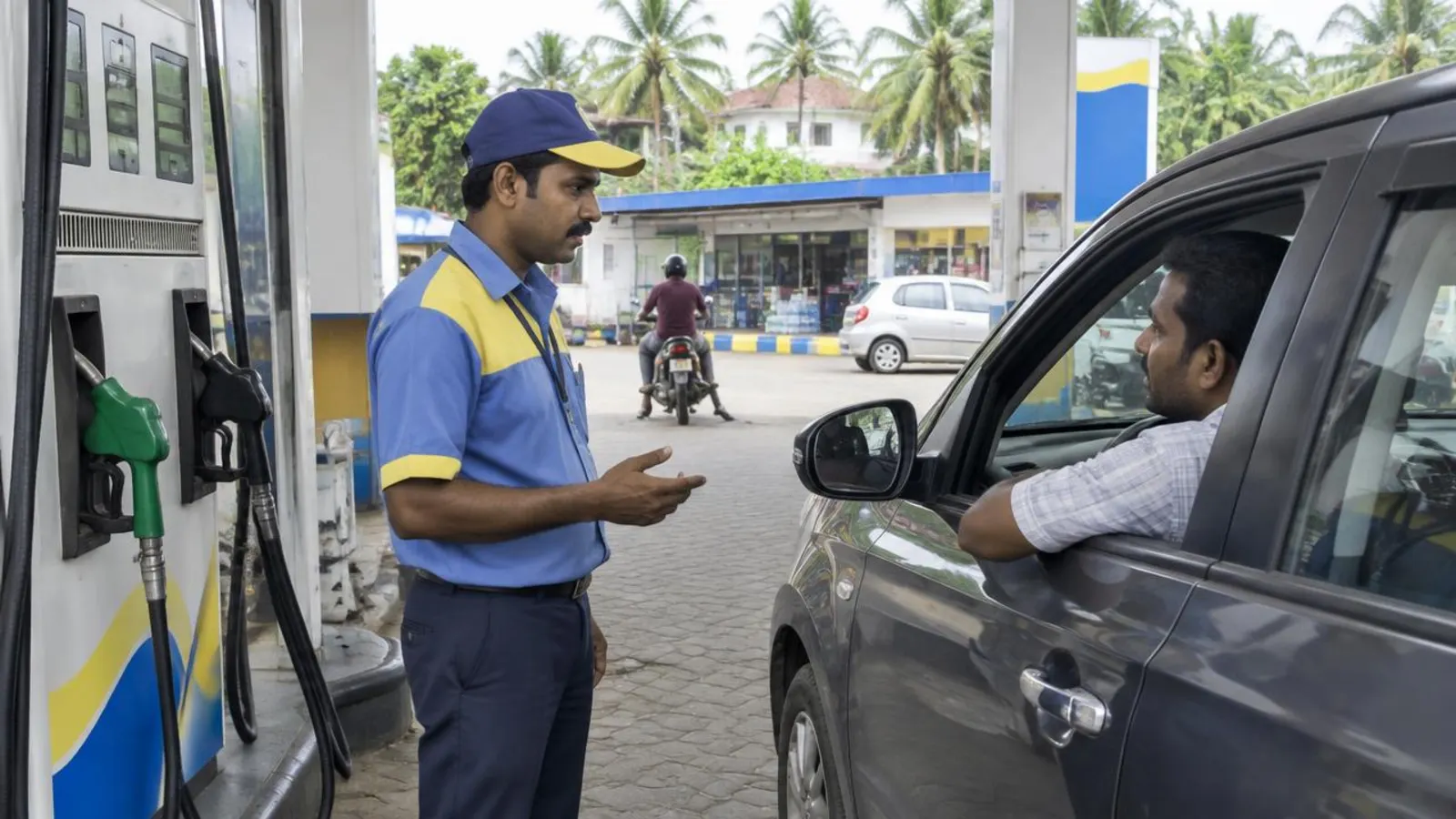
A long-established BPCL retail outlet in Thiruvananthapuram signed up for a SALT intervention to explore lubricant sales. Both the dealer and staff were sceptical. Cheaper engine oil was available in the market, they argued, so there seemed little reason for motorists to buy lubricants or listen to a sales conversation at a fuel station.
Three beliefs dominated: higher-priced engine oil would not sell; customers would not change their oil at a petrol pump; and motorists would not stop to engage with staff about engine oil. Rather than accept those assumptions as established facts, the intervention began by investigating the local market.
02 · The turning point
The market story did not match the field observations.
The location identified as a thriving market for cheaper oil showed surprisingly little customer activity. Local mechanics described oil arriving from a neighbouring state and raised concerns about spurious products. These were field reports, not independently verified findings about particular sellers or products.
The opportunity was therefore not simply to compete on price. It was to help customers consider oil quality and suitability, understand timely replacement and recognise the convenience of a service available at the fuel station. The team needed to test a conversation instead of assuming a refusal.
Have customers ruled out the offer—or have we stopped asking?
03 · The intervention
Check. Explain. Offer. Learn from the response.
The approach centred on oil checks as a natural opening for a relevant customer conversation.
- 01
Start the conversation
Encourage staff to approach motorists naturally and introduce the subject of engine oil.
- 02
Promote an oil check
Use the check to draw attention to oil condition and the importance of timely replacement.
- 03
Explain suitability and value
Help customers understand the product and reasons to consider a suitable grade, rather than competing only on the lowest price.
- 04
Test in real interactions
Build employee confidence by trying the approach with customers instead of assuming they will decline.
On the ground
Three myths, tested against actual customer behaviour
The reported outcomes challenged each of the beliefs that had initially discouraged the team.
“Higher-priced oil will not sell”
82% of oil sold came from grades priced above the outlet’s lowest-priced grade.
“Oil changes will not happen at a pump”
The outlet completed 395 oil changes over 24 operating days.
“Motorists will not engage”
Customers did engage when offered a chance to understand the oil check and service.
04 · The evidence
The numbers challenged conventional wisdom
82% of oil sold was priced above the outlet’s lowest-priced grade. The remaining 18% was the lowest-priced grade.
Oil changes ÷ operating days
About 16.5 oil changes per operating day across the reported period. No daily readings or pre-intervention baseline are supplied.
In the first month, the outlet completed 395 oil changes in 24 days. Dividing the reported total by operating days gives an average of approximately 16.5 changes per day. This is an average across the period, not a claim that every day produced the same result.
The reported sales mix was equally revealing: 82% of oil sold came from grades above the outlet’s lowest-priced option. Customers did not choose solely on price. Engagement, product understanding and the convenience of the service all provided reasons to reconsider the original assumptions.
Execution was not consistently sustained throughout the month. Targeting lacked continuity in some areas, yet the first month established a promising baseline. More disciplined follow-through represented an opportunity to explore—not a basis for projecting an invented future sales figure.
Source: supplied SALT website case-study account. Outcomes are reported, not independently audited here or guaranteed for another business.
The key takeaway
Assumptions close doors. Evidence opens possibilities.
Question inherited beliefs, investigate the local market and test relevant customer engagement before deciding an opportunity does not exist. The value of the intervention is not only a number—it is a better basis for the next operating decision.
Better People. Better Performance. Better Business.
What this means for your operation
Lessons worth taking to your floor
Market intelligence before a sales pitch
Investigate the story the team believes about local demand instead of treating it as settled evidence.
Value beyond the cheapest grade
Discuss quality, suitability and timely replacement rather than assuming the lowest price always wins.
A service-led conversation
An oil check creates a relevant context for engagement and a convenient opportunity to act.
Execution is part of the opportunity
Track real outcomes and improve continuity; do not turn an encouraging first month into unsupported forecasts.
What lubricant opportunity is your team overlooking?
Talk to SALT about testing customer engagement, oil-check conversations and service opportunities at your outlet.
More case studies
← Back to SALT Effect
From Menu Confusion to 3X Business Growth in Just Two Weeks
Staff couldn't explain the fusion menu, so guests never discovered it. A daily peer-learning habit changed that.

From First-Time Workers to a Commission-Ready Industrial Kitchen
Humour, local language and visual aids prepared first-time workers to run a high-tech industrial kitchen.
From 120 Litres to 2 KL of Premium Petrol
Premium sales grew without cannibalising regular fuel. MS also grew from 2 KL to 5 KL.

From Resistance to Results: How Frontline Initiative Unlocked Premium Fuel Sales
One employee's 65-litre sale turned a sceptical team around.